India can recycle >40% of its Sewage Water
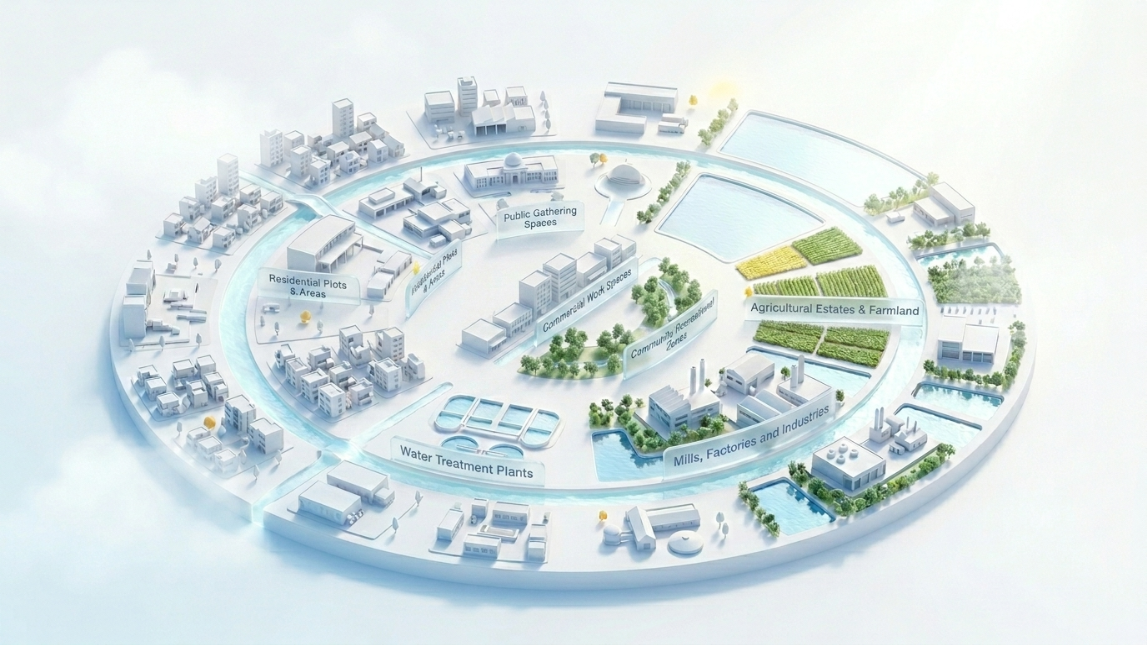
India generates over 72,000 million litres of sewage water every single day, which is enough water to fill about 29,000 Olympic-sized swimming pools - every 24 hours.
Yet less than 40% of it gets systematically treated.
The remaining volume of water disappears into rivers, lakes, groundwater systems, and urban drains, often categorised only as contamination, pollution, or civic failure. When seen from a different purview, this is also one of India’s largest untapped urban water reserves, even when compared globally.
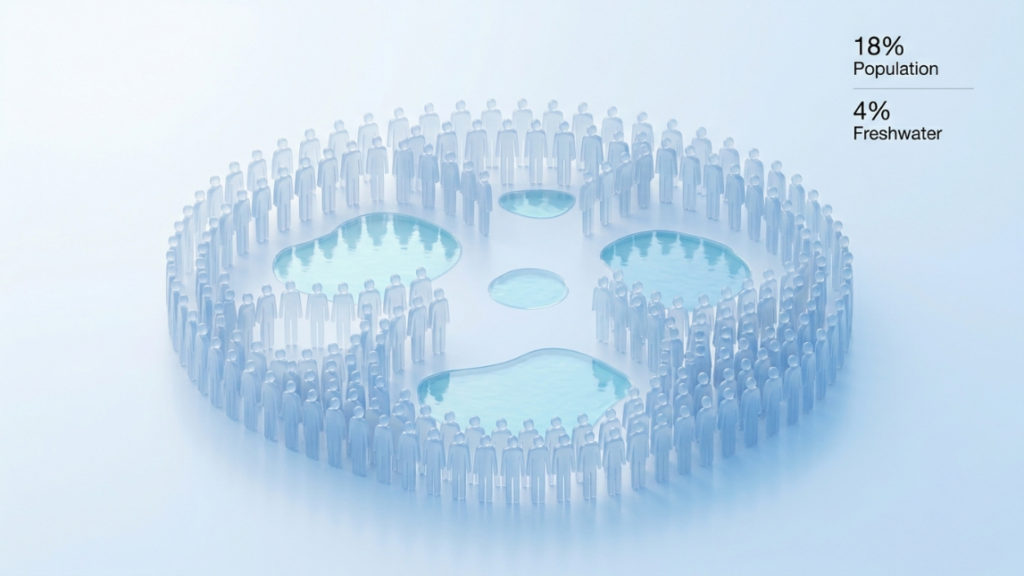
For a country that holds 18% of the global population, yet only around 4% of the world’s freshwater resources, India’s future of waste water management should not depend only on rivers, dams, or rainfall. It should increasingly depend on the sewage that India already discards in gallons on a daily basis.
Historically, civilisations have been known to survive by basing their settlements close to freshwater systems. Almost 5000 years ago, the Indus Valley flourished around engineered drainage and water-storage systems. Modern, developing India now stands at the crossroads of a booming water crisis - the challenge is not locating water, but recovering it.
By 2050, India’s urban population is expected to cross 600 mn, and industrial water demand will double and beyond, and climate volatility will make rainfall patterns increasingly unreliable. For a future like that, wastewater stops being waste; it should become a resource.
How Global Nations Reimagined Wastewater
Singapore, being a country that imports close to none of its freshwater naturally, has spent decades tackling water insecurity as a geopolitical vulnerability. They understood this before everyone else, and instead of relying on imports and reservoirs indefinitely, they built NEWater - one of the world’s most advanced wastewater treatment and reuse systems.
Today, Singapore’s reclaimed sewage contributes nearly 40% of the country’s national water demand. This number is expected to exceed 50% in the next three decades.
Singapore’s water management systems are remarkable not only because of technological sophistication, but also because of the psychological shift that they have achieved. Singapore has transformed sewage as an entity from something that the citizens feared into something that the industries came to trust as a resource.
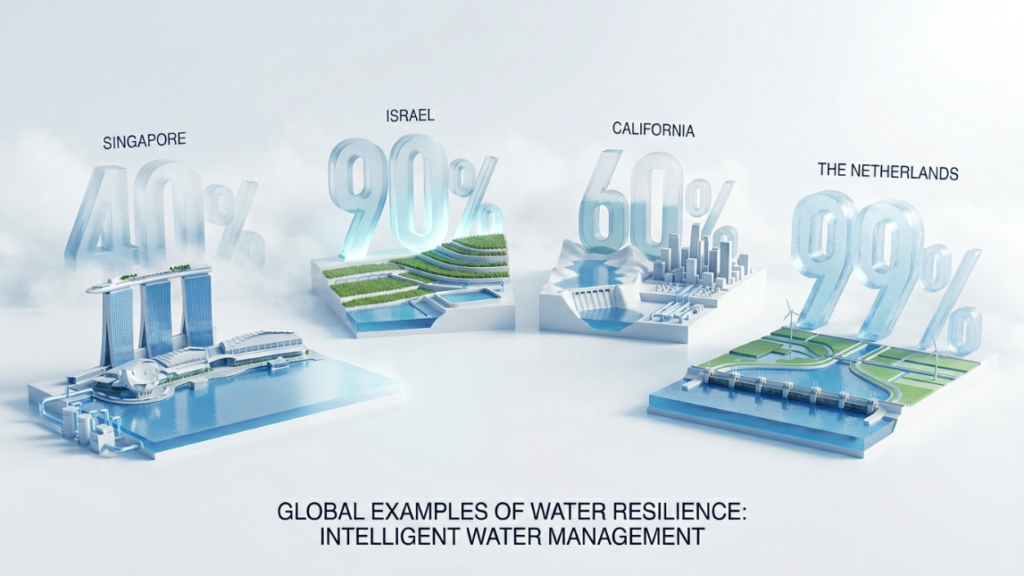
Israel followed an equally ambitious path, but one riddled with immense difficulty. Today, Israel recycles almost 90% of its wastewater, most of which is repurposed for agriculture. Israel incorporated advanced membrane filtration, ultraviolet disinfection, reverse osmosis, and industrial recycling systems, which allowed their reclaimed water to support semiconductor manufacturing, cooling infrastructure, commercial systems, and eventually potable integration.
California, learning from numerous and frequently occurring drought crises, accelerated urban sewage water reuse systems and implemented them across Los Angeles and Orange Counties.
The Netherlands, being a country historically associated with flood management, increasingly integrates circular water treatment process systems with urban planning and industrial infrastructure.
These global nations did not achieve resilience in water resource management because they possessed more water; rather, they reached that stage because they redesigned how water moved through their societies, industries and ecosystems.
India's Hidden Reuse Economy
What makes India’s situation particularly interesting is that several Indian cities and industrial regions have already been operating systems that resemble global reuse models. India is not starting modern water management systems from ground zero.
Chennai has consistently supplied treated municipal wastewater to industries all the way up to the Manali industrial corridor for over two decades.
Surat and Ahmedabad’s treatment infrastructures increasingly support industrial - textile and chemical clusters through efficient implementation of ETPs and urban wastewater management through STPs by aggressively adopting recycling systems, since their groundwater allocation and freshwater procurement became commercially restrictive.
In Surat, when the Surat Municipal Corporation realised that the conventional lagoon-based systems would struggle to keep up with the pace of urban expansion, the SMC chose a different path. Through Jaskan's proprietary electrochemical nanotechnology, more than 527 million litres of wastewater have been treated in Surat, producing reused water which is suitable for irrigation and environmentally safe discharge. The system has helped prevent more than 16,200 tonnes of CO₂ equivalent emissions, and created climate benefits comparable to planting roughly 2.025 million trees.
In Tamil Nadu’s Tiruppur, textile exporters who faced strict environmental scrutiny have invested proactively in zero liquid discharge (ZLD) plants and water treatment infrastructure way before sustainability became fashionable corporate jargon.
Rajasthan has treated and managed sewage and supports peri-urban agriculture in multiple regions which face chronic water stress.
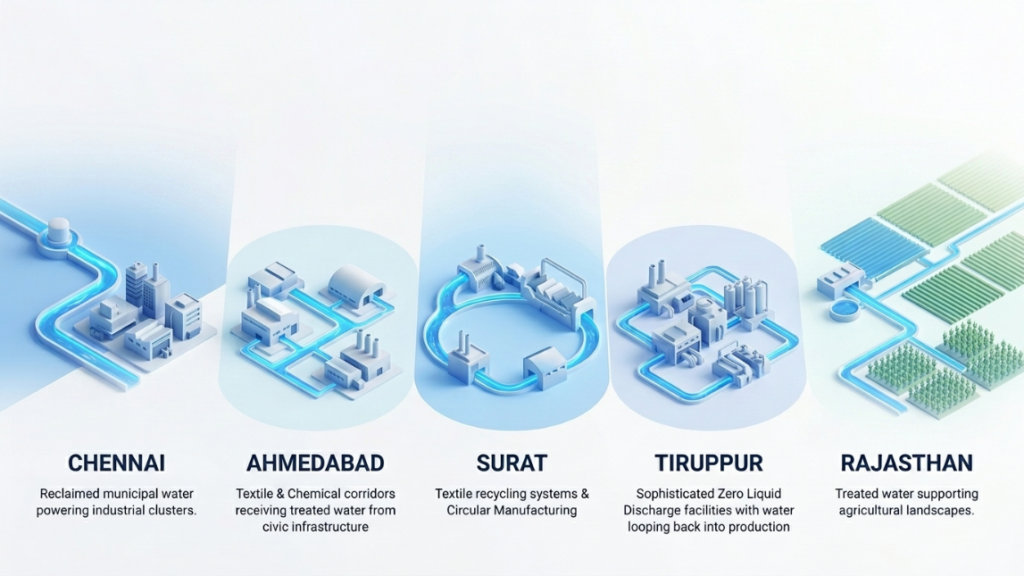
India’s challenge, therefore, is not the absence of systems, but the absence of efficient integration of waste water management. India undeniably possesses conceptual frameworks and the potential of future-ready water systems, but they have not been connected to a national economic network around wastewater management, water treatment and water reuse.
Countries operating at economic and political levels equivalent to India also demonstrate resilient reuse systems without waiting to become wealthy first.
China, for instance, have rapidly expanded their industrial water treatment plants as its manufacturing growth intensified pressure on the freshwater systems. Northern Chinese cities, previously dealing with severe groundwater depletion, now integrate reclaimed water into industrial cooling systems, landscaping, and manufacturing operations at massive scale.
Brazil has been historically challenged by urban water scarcity despite abundant freshwater resources, and has now increasingly invested in wastewater recovery systems around the São Paulo industrial corridors where increasing population density and rising levels of pollution began threatening their economic continuity.
South Africa has dealt with both drought cycles and infrastructural inequalities, learning from which it accelerated their decentralized water reuse and industrial water recovery systems in several municipalities after Cape Town’s near “Day Zero” water crisis back in 2018.
Mexico City - a megacity built around a water-stressed geography and packed with dense urbanisation - has dramatically expanded water treatment and reuse infrastructure as extraction pressures continue rising.
None of the countries solved their water problems overnight.
India: From Compliance to Strategic Advantage
What changed was the realisation that economic growth without advanced sewage water management eventually becomes financially unsustainable.
India’s industrial economy is already forcing this transition naturally. Textile processing, chemicals, pharmaceuticals, food manufacturing, thermal power, mining, and heavy engineering collectively consume enormous quantities of freshwater every day. Groundwater extraction remained cheap enough for industries to avoid investing aggressively in advanced reuse infrastructure. That equation is changing rapidly. Industrial freshwater procurement costs are increasing across multiple states, groundwater regulation is tightening, and urban-industrial competition over water allocation is becoming politically sensitive.
For manufacturers, modern ETP Plant and STP Plant systems are no longer just environmental obligations. A large textile processing unit operating a sophisticated effluent treatment plant with membrane recovery and evaporation systems can reclaim up to 90-95% of process water. Every litre recovered directly reduces freshwater dependence.
In regions such as Gujarat and Tamil Nadu, reclaimed industrial water can already carry economic value comparable to fuel savings or raw-material optimisation. Wastewater is slowly entering the balance sheet.
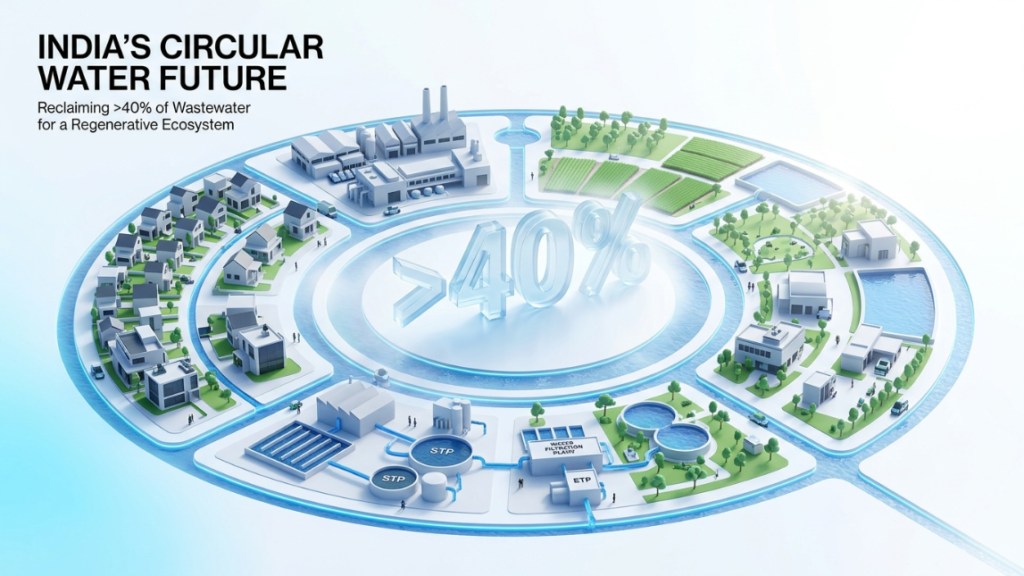
The technological side of this transformation is evolving faster than public perception. India already manufactures and deploys many advanced systems used globally in industrial recovery infrastructure. Modern water filtration plant ecosystems combine ultrafiltration, dissolved air flotation, membrane bioreactors, reverse osmosis, evaporation technology, biological treatment, and increasingly sophisticated electrochemical technology to handle complex industrial contaminants.
Electrocoagulation and electro-oxidation systems, for instance, are becoming increasingly important in sectors such as dyes, chemicals, pharmaceuticals, and electroplating where conventional treatment methods struggle with high contaminant loads.
Simultaneously, automation and AI-driven diagnostics are changing how treatment systems operate. Smart monitoring can now predict membrane fouling, optimise chemical dosing, reduce energy consumption, and improve recovery efficiency in real time.
Globally, the next generation of water technologies is moving toward intelligent circular infrastructure rather than one-time disposal systems. India’s advantage lies in the fact that it already possesses one of the world’s largest engineering and manufacturing ecosystems capable of scaling such systems domestically.
Is the Policy taking any better shape?
The policy environment is also beginning to shift in meaningful ways. India’s Jal Shakti Ministry introduced formal reuse guidelines in 2023 covering agriculture, industrial cooling, urban landscaping, and treated wastewater applications. The Smart Cities Mission, AMRUT projects, Namami Gange investments, and state-led urban sanitation programmes continue expanding sewage treatment capacity across major urban centres. The Central Pollution Control Board estimates that India’s installed treatment capacity continues to grow steadily every year, while industrial demand for recycled water is rising simultaneously. Increasingly, municipalities are exploring long-term contracts where treated sewage becomes dedicated industrial supply. This is critical because successful reuse systems globally did not emerge only through engineering. They emerged through pricing architecture, policy continuity, and institutional trust. Singapore succeeded because reclaimed water eventually became cheaper and more reliable than imported alternatives. India’s industrial corridors may reach a similar tipping point as freshwater becomes costlier and less predictable.
There is also a quieter cultural transition taking place beneath the policy and engineering layers. For decades, public conversations around wastewater treatment focused almost entirely on sanitation, disease prevention, and pollution control. Those concerns remain essential, but the future conversation is becoming broader. Wastewater is increasingly tied to manufacturing resilience, ESG reporting, urban continuity, climate adaptation, and long-term economic competitiveness. Global investors now evaluate industrial sustainability metrics more seriously than ever before. Export-oriented sectors increasingly face environmental scrutiny around discharge quality, recycling efficiency, and water intensity. Factories operating advanced industrial waste water treatment systems are therefore not merely protecting compliance positions. They are strengthening future market relevance itself.
The future Indian city may ultimately operate less like a linear consumption system and more like a circular resource ecosystem. Water enters the city, gets used, treated, recovered, redistributed, and reused across industries, infrastructure, agriculture, and utilities. In such a model, sewage is no longer the endpoint of urbanisation. It becomes part of the supply chain. The economics already support this direction in many industrial regions. The technology already exists. Jaskan stands for a future where water is treated not as a disposable utility, but as a recoverable industrial resource. Policy architecture is emerging. The industrial need is becoming urgent. What remains is scale, coordination, and imagination. Resilient economies will depend on intelligent wastewater treatment and reuse, and Jaskan works across water treatment plants, zero liquid discharge plant systems, ETP infrastructure, and advanced water filtration plant technologies designed to help industries reduce freshwater dependence while strengthening long-term operational continuity.
That may be the most important lesson countries such as Singapore, Israel, China, and the Netherlands offer India.
Water resilience is not achieved by finding unlimited freshwater. It is achieved by designing systems intelligent enough to use the same water multiple times. India already possesses the population scale, industrial capability, engineering depth, entrepreneurial ecosystem, and policy momentum required to move toward that future. Jaskan develops infrastructure that enables manufacturers, industrial estates, and urban ecosystems to recover, recycle, and reuse water more intelligently - turning environmental responsibility into practical economic strategy. effectively from one of the world’s fastest-growing economies implementing recycling for its own future.Water resilience is not achieved by finding unlimited freshwater. It is achieved by designing systems intelligent enough to use the same water multiple times. India already possesses the population scale, industrial capability, engineering depth, entrepreneurial ecosystem, and policy momentum required to move toward that future. Jaskan develops infrastructure that enables manufacturers, industrial estates, and urban ecosystems to recover, recycle, and reuse water more intelligently — turning environmental responsibility into practical economic strategy. effectively from one of the world’s fastest-growing economies implementing recycling for its own future.
Remediating Future is an ongoing knowledge initiative by Jaskan Nanotechnologies that explores water, industry, sustainability, infrastructure, technology, policy, and resource resilience. Through research, insights, case studies, and stories from across the world, we aim to make the future of water more understandable, accessible, and actionable for industries, communities, and decision-makers alike.
Treated Water: The New Life-Saving Resource
Treated Water – the New Life-Saving Resource The world consumes approx. 7mn litres of freshwater every minute. By 2030, global...
India’s Cleanest Rivers
The truth about India’s rivers that unfortunately never makes it to the news is that not every river is in...
ZLD: A ‘Liquid’ Investment Asset
Freshwater demands globally are projected to exceed the current sustainable supply numbers beyond 40% by the year 2030. The water...