India’s Cleanest Rivers
The truth about India's rivers that unfortunately never makes it to the news is that not every river is in crisis. Some rivers are thriving with abundance, and the reasons why they are thriving are not coincidental.
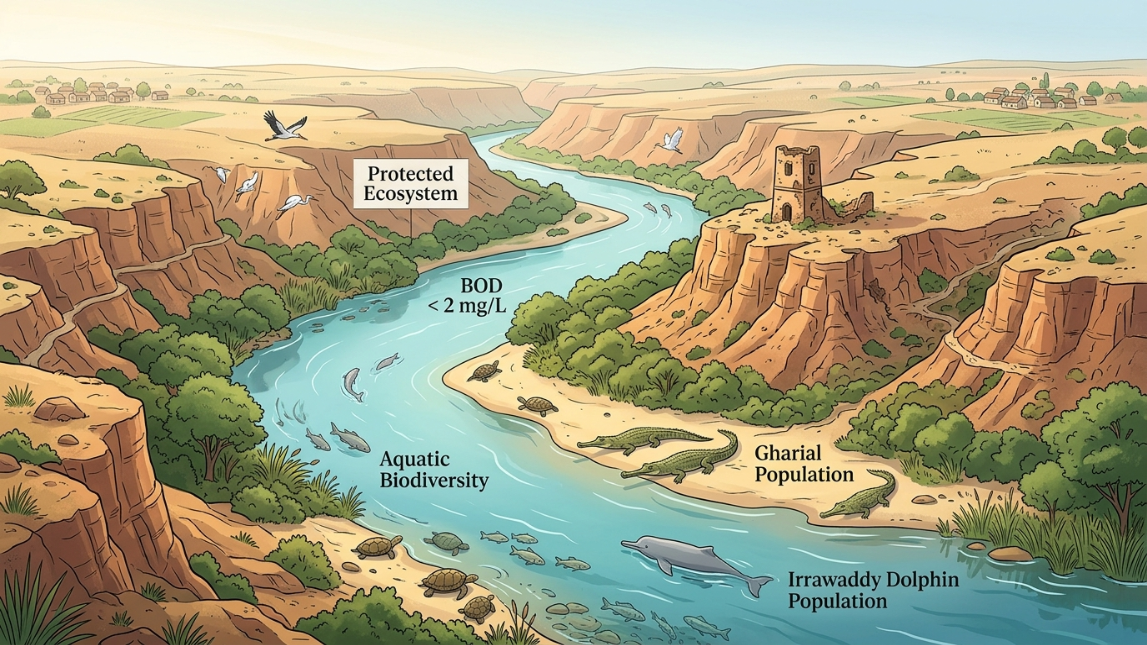
Some examples are the Chambal, which flows through Madhya Pradesh and Rajasthan, being one of the cleanest major rivers of India. Chambal has a BOD (biochemical oxygen demand - the standard measure of organic pollution) consistently recorded below 2 mg/L, which is well within the safe threshold (3 mg/L) as advised by the Central Pollution Control Board. The Beas of Punjab, stretches of the Mahanadi in Odisha, and Sikkim’s Teesta tell similar stories. These rivers are the ones that the scientists study in order to understand what a healthy Indian river is supposed to be like.
What kept them unpolluted and pristine is not geography alone. It is some decisions - deliberate, structural, and yet some unremarkable - at the time they were made. Jaskan deep dives to learn some integral lessons in modern waste water management, sewage water management, and long-term ecological planning.
How did Chambal become a National Sanctuary… 'accidentally'?
For decades, Chambal was famous for the wrong reasons. Her ravines were a dacoit territory - remote, inaccessible, fearsome, and ungovernable. In 1978, the Indian government declared large stretches of the Chambal riverbed as the National Chambal Sanctuary - primarily to protect the Gharials and the Ganges River Dolphins. Protection against pollution came as a supplementary reaction to the Law.
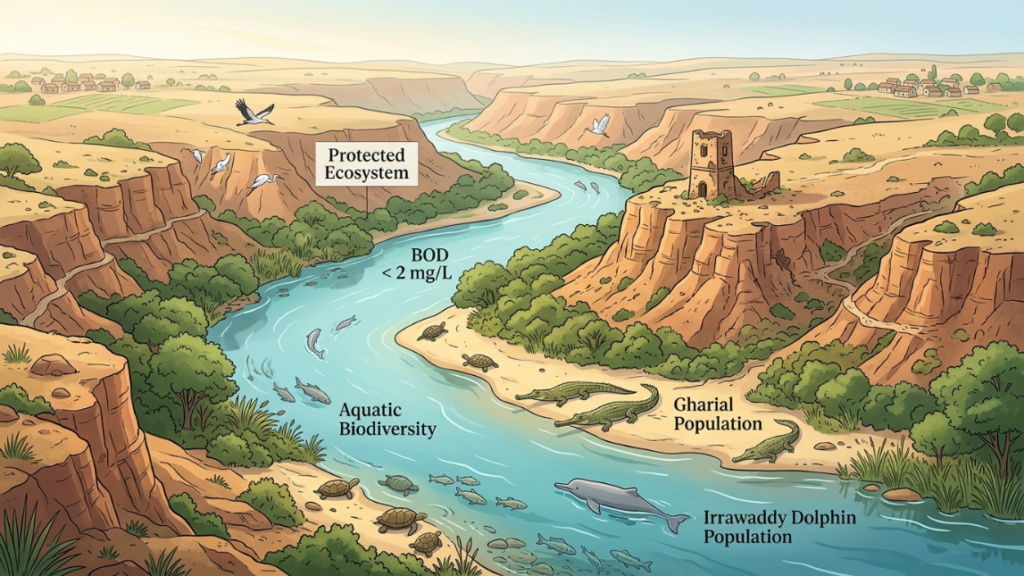
Chambal houses no major industrial cluster to operate along its riverbanks. No urban sewage discharges into it either. Chambal’s sanctuary status discouraged encroachment, thus improving the ecology by leaps and bounds. An accidental outcome nonetheless makes Chambal one of the healthiest river ecosystems in South Asia - home to over 35 species of fish, the critically endangered Gharial alligators, and concentrated populations of the Irrawaddy Dolphins that have disappeared almost everywhere else in the region.
Chambal’s contrasting and prideful existence only comes to prove that in the absence of industrial and urban pollutants, the river recovers, repairs and redeems its path. Instead of intervention, rivers actually need the opposite - independence to thrive. This is perhaps one of the strongest natural demonstrations of effective industrial waste water treatment and pollution prevention when contaminants never reach the river system in the first place.
Upstream decisions that trickled down well for the Beas
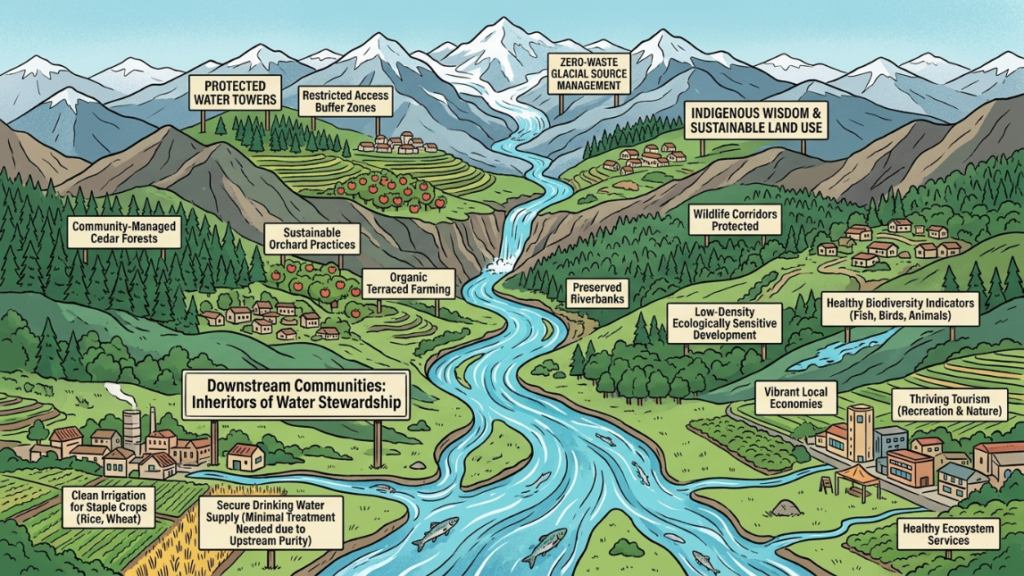
Beas originates in Himachal Pradesh, passing through Kullu, Mandi and entering Punjab via Pathankot. The upper stretches of the river above Mandi carry exceptionally healthy water quality indicators, with Dissolved Oxygen Levels sitting above 8 mg/L, Coliform counts reflecting negligible human contamination, and the river’s Conductivity readings indicating that it carries clean, mineral-balanced water.
How? Upstream land use.
Since Himachal Pradesh's upper valleys possess a low industrial density - as their 2006 Industrial Policy specifically restricted heavy industry settlements in ecologically sensitive zones - this single-handedly created a cleaner standard for every city and state downstream from there.
This upstream-downstream relationship is the one that the water scientists call one of the most fundamental practices of river water management. Himachal Pradesh has consistently made conservative decisions for its ecology, and those decisions carry the ecology’s legacy forward in the potent chemistry and biology of the region, and reflecting principles that modern water treatment process planning increasingly attempts to replicate through catchment-level environmental management.
Sikkim’s Teesta: Relationship of an exemplary commitment
A decade ago in 2016, Sikkim declared itself India's first fully organic state. While primarily agricultural in context and intent, the decision posed a measurable impact on the river Teesta and her tributaries. It catalysed the reduction in agrochemical runoff, recorded lower nitrate concentrations in monitored river stretches, improved the aquatic ecology and created biodiversity in those sections of the river which had been previously known to display nutrient stress.
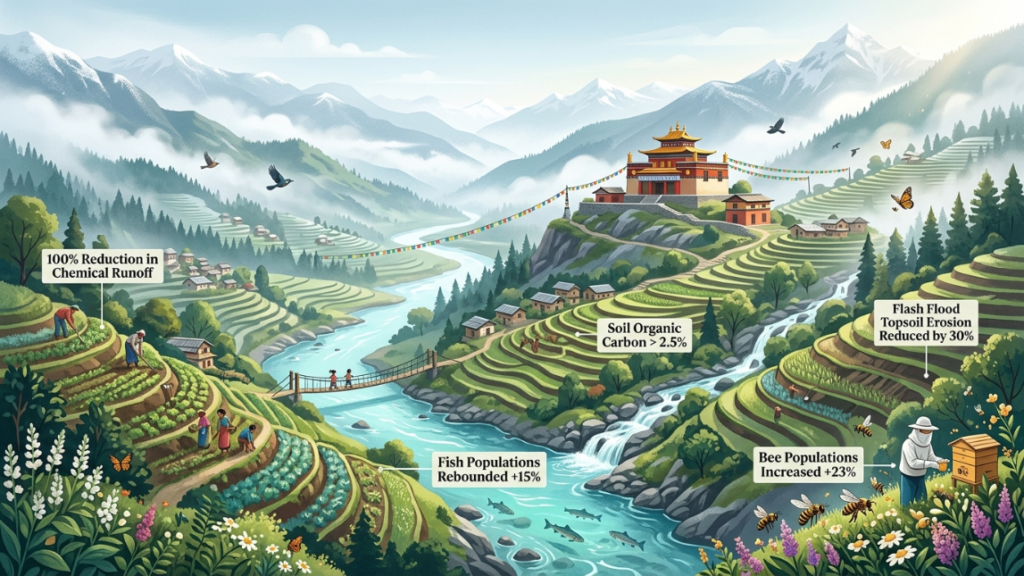
While the Teesta is not uniformly unpolluted - downstream sections of the river in West Bengal are unarguably distressed - yet the Sikkim riverbed represents the effect of deliberate policy-making on the water quality data and holistic ecological impact. Sikkim won the UN's Future Policy Award for its ‘fully-organic’ programme, while the Teesta recorded such results that most of the country has never come close to experiencing, which goes on to say that environmental outcomes are often determined long before any water treatment plant or water filtration plant is infrastructurally implemented into place.
What do these rivers have in common?
Three factors appear in three of India's cleanest river stories.
Low Industrial Discharge Density along the riparian corridor. While Chambal displays closer to zero, and upper Beas has significantly low numbers, some river stretches that record the best water quality data in India contain zero industrial discharge density.
State-level policy decisions helped create ‘buffer’ zones, restricted certain industrial encroachment, and changed agricultural practices on an aspirationally high plane. Such laws and policies were seldom made with ‘rivers’ at the centre of their decision-making. The water quality numbers often resulted as secondary outcomes of the respective forest policies, or tourism regulations, or agricultural reform and practices.
Effective enforcement of what meagre regulation exists. The Chambal Sanctuary has an infrastructure borne of enforcement because the Gharial protection commanded nothing short of federal attention. The riverbed recovery in Himachal Pradesh benefits from a remarkably functional State Pollution Control apparatus. The correlation between regulation or enforcement and healthier river ecology across Indian states is among some of the most abundant findings of CPCB's comparative data.
The Question of the Replicability of Conditions
The reasonable question is whether these conditions can be recreated elsewhere with scalable parameters, whether India's cleanest rivers are simply lucky enough to have been spared of industrial settlements or urban developments, whether these rivers are optimal results of conscious decision-making or not.
The answer from the data is undeniably mixed but surely not discouraging. Bengal’s Damodar is a heavily industrialised and historically one of India's most polluted rivers, which has shown remarkable improvement in dissolved oxygen along the stretches where new treatment infrastructure was placed between 2015 and 2022. River Gomti in Lucknow displayed improved BOD levels following the commissioning of upgraded STPs under the NMCG programme. Improvement is agreeably slower, and less dramatic than degradation, and requires sustained infrastructure and investment rather than solitary interventions - but the direction of change, in rivers where optimum waste water treatment has been applied, shows consistently positive results.
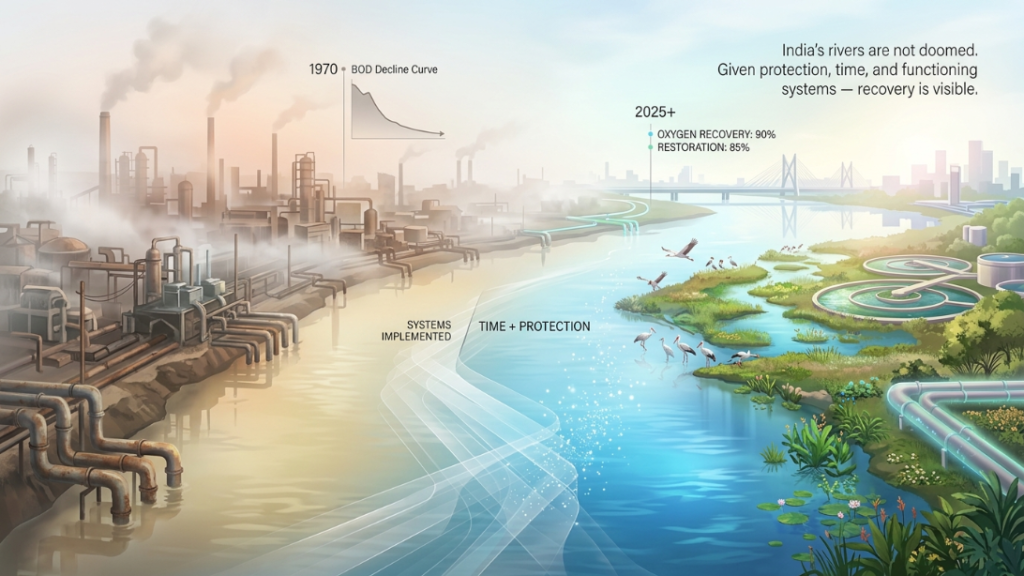
India's cleanest rivers are not separately enlisted waterways. They are rivers that, through policy, geography, or structural accident, received what every Indian river desperately demands: a water catchment that treats the resource as a returning asset.
Remediating Future is an ongoing knowledge initiative by Jaskan Nanotechnologies that explores water, industry, sustainability, infrastructure, technology, policy, and resource resilience. Through research, insights, case studies, and stories from across the world, we aim to make the future of water more understandable, accessible, and actionable for industries, communities, and decision-makers alike.
Treated Water: The New Life-Saving Resource
Treated Water – the New Life-Saving Resource The world consumes approx. 7mn litres of freshwater every minute. By 2030, global...
India can recycle >40% of its Sewage Water
India generates over 72,000 million litres of sewage water every single day, which is enough water to fill about 29,000...

ZLD: A ‘Liquid’ Investment Asset
Freshwater demands globally are projected to exceed the current sustainable supply numbers beyond 40% by the year 2030. The water...