ZLD and Carbon Credits: Water Treatment Investment
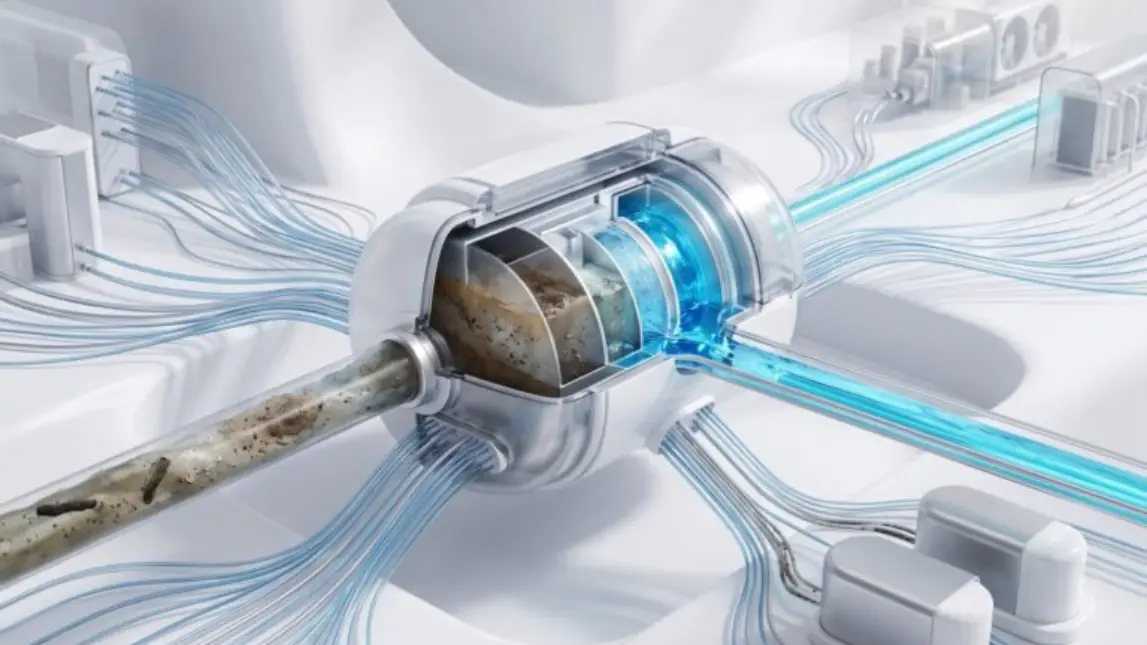
Freshwater demands globally are projected to exceed the current sustainable supply numbers beyond 40% by the year 2030. The water resource management industry itself accounts for approx. 20–22% of the global freshwater withdrawals, while sectors such as textiles, chemicals, energy, and manufacturing spend anywhere between 5–20% of their operational utilities budget on water-related procurement, treatment, discharge, and compliance costs.
Yet despite proven success across industries globally, less than 1% of global industrial facilities currently utilise true Zero Liquid Discharge (ZLD) systems at scale, which makes it one of the most underutilised resource-recovery systems in modern industrial infrastructures, hence a beaming opportunity in itself.
Wastewater Treatment is not a compliance expense
For decades now, industries have treated wastewater management as a mere regulatory obligation: Treat water, meet the discharge norms, and submit reports, then move on. This model, however, is being rendered redundant.
Today, every ounce of wastewater carries three potential assets: reusable water, recoverable minerals and materials, and measurable carbon credits.
And as the economics are changing rapidly, freshwater is becoming more expensive to source and extract – both financially and ecologically. Groundwater extraction is becoming increasingly regulated, for the right reasons too. Additionally, industrial discharge standards continue to tighten, and investors have begun to evaluate Environmental, Social, and Governance (ESG) risks, opportunities and performance metrics alongside profitability. In most sectors, the question is no longer whether to invest in wastewater treatment and reuse; it is whether the businesses can bear the cost of it or not.
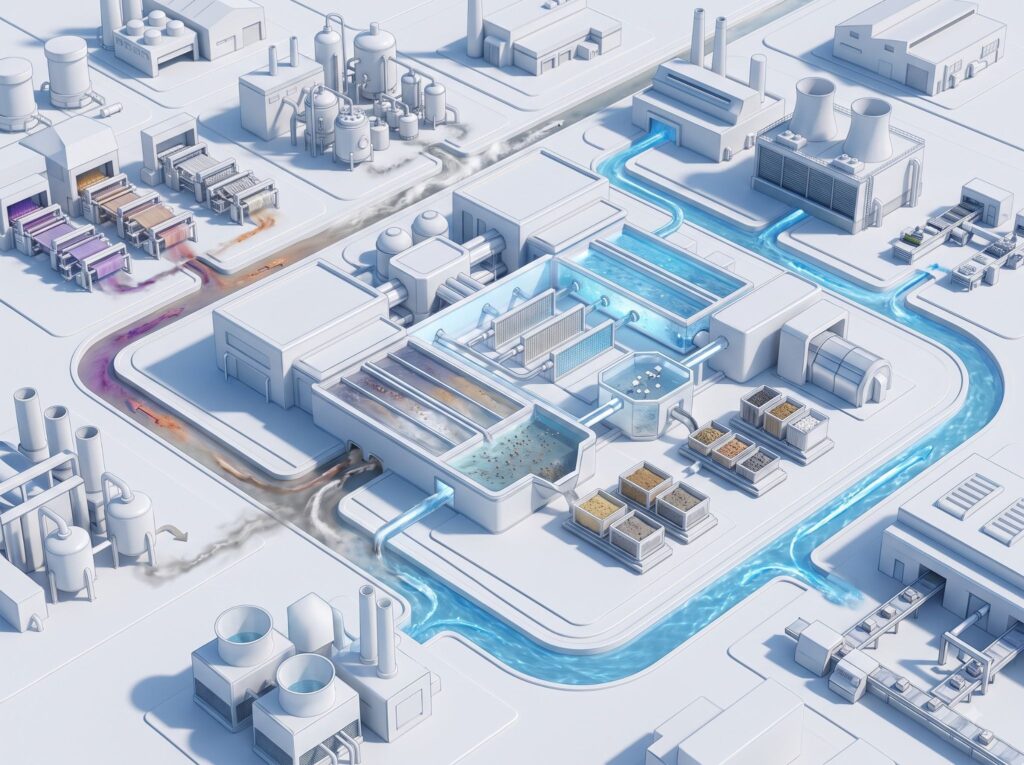
Jaskan deep dives into understanding how waste water treatment, ETP Plant Systems, STP Plant Systems, Electrochemical technology infrastructure, and Zero Liquid Discharge Plant ecosystems transform wastewater from being an operational burden into a revenue-generating resource mechanism.
Across India, agriculture consumes north of 80% of the country’s freshwater reservoirs. Moreover, industrial sectors consume the other 10–15%. India's increasing urban population places an unprecedented demand for water management systems and hence pressure on municipal and industrial water resources. Water is becoming a strategic asset, while already being a scarce resource.
The quick, rising costs of water
According to NITI Aayog, 21 major cities are projected to face severe groundwater depletion, while industries will be burdened by profuse procurement costs, operating risks and challenges, and stifling capacity constraints in the near future.
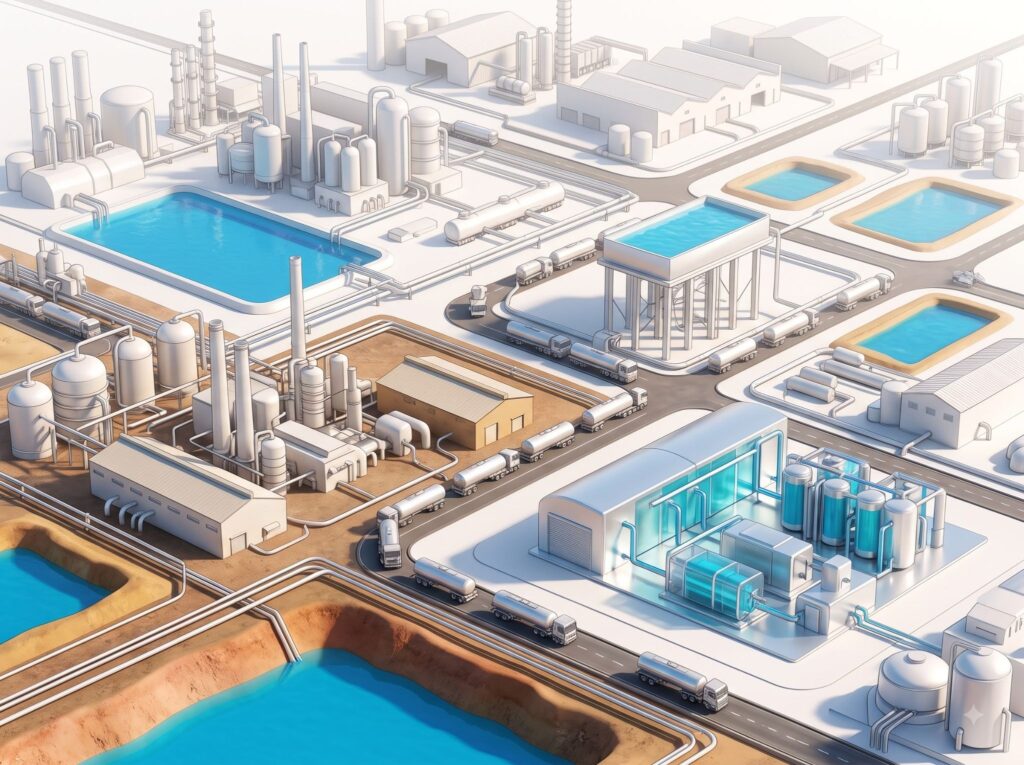
In Gujarat's chemical belt — Ankleshwar, Dahej, Bharuch, Panoli, Vapi — the industrial water procurement costs that were priced at ₹8–15 per Kilolitre less than two decades ago are projected to cross ₹40–80 per Kilolitre. This is of course, dependent on sources, seasons, water treatment requirements, transportation and energy costs, and municipal infrastructure. In some highly constrained industrial zones, imported tanker water can surpass ₹120–200 per Kilolitre.
Even a mid-sized textile processing facility would require anywhere between 2–10 million litres every day, which means that even a ₹20–30 increase per Kilolitre could translate into cost increases of crores of rupees annually. The combined lifecycle cost of industrial water management amounts to 2–8% of the total operating expenditure budget, and this figure is expected to overstep as the groundwater extraction process is set to become more regulated.
What Is ZLD? How Does ZLD Recover Water?
A Zero Liquid Discharge Plant (ZLD) is built around the principle that no wastewater should leave a facility if it can be recovered and reused.
Instead of treating water merely for disposal, ZLD systems are designed to optimise the usable water by segregating the contained contaminants, salts, solids, and residual waste streams in the resulting disposed water.
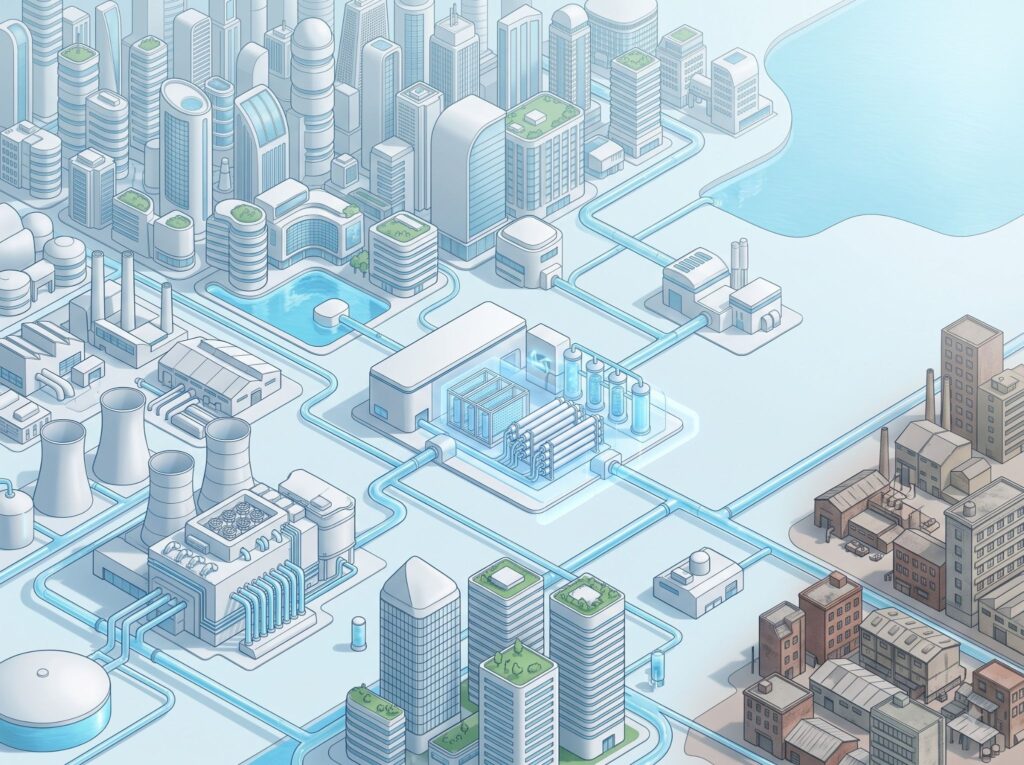
The current water treatment process infrastructure combines multiple technologies, namely ETP systems, biological treatment, DAF water treatment, ultrafiltration mechanism, reverse osmosis purification, evaporation systems, crystallizers, and advanced electrochemical technology. Each stage chronologically improves the water quality and maximises the recovery efficiency while minimising the environmental discharge of waste water.
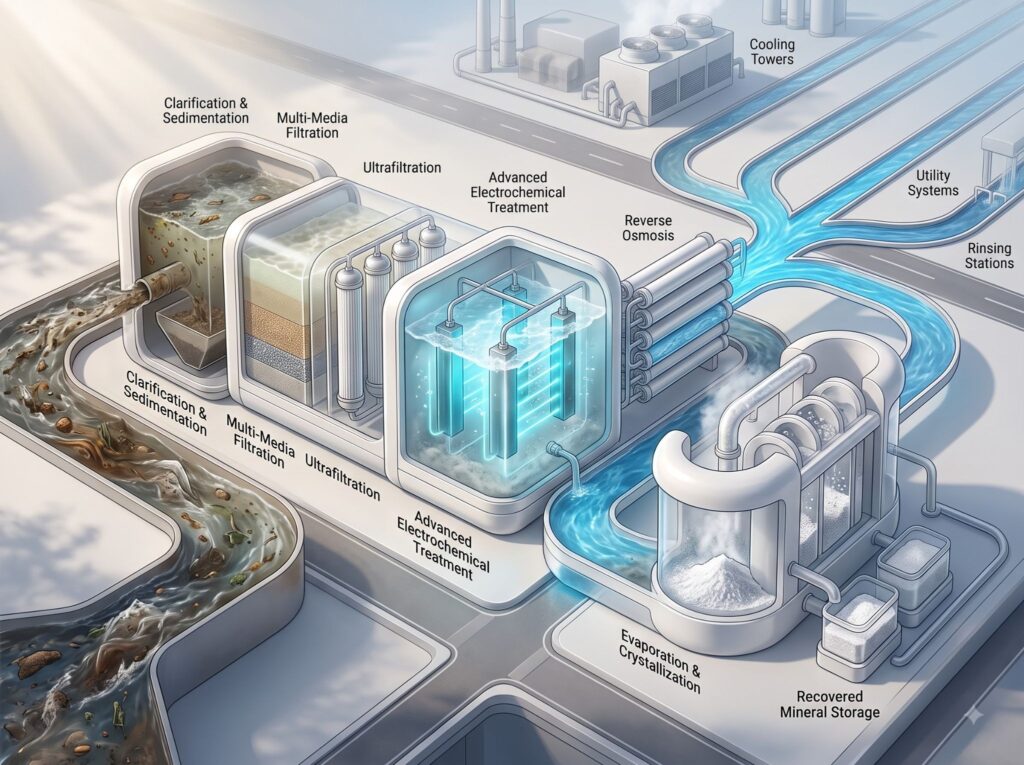
The results are remarkable in most advanced ZLD systems, which recover between 90-95% of processed water by reducing the freshwater intake by a dramatic 75% while achieving near-zero discharge. ZLD systems create a circular ecosystem where treated water returns to cooling towers, process lines, utility systems, and manufacturing operations instead of leaving the facility altogether.
What is Carbon Credit? How are Carbon Credits counted?
Carbon Credit represents one metric tonne of carbon dioxide equivalent (CO₂e) emissions that have been avoided, reduced, or removed through efficient functioning of a system, mechanism or technology. Usually, carbon credits are commonly associated with renewable energy and forestry projects; however, industrial water infrastructure is becoming an undeniable part of the carbon conversation as well, provided the scarcity of water makes it a resource to be increasingly conscious and frugal about.
Every stage of the water cycle consumes energy.
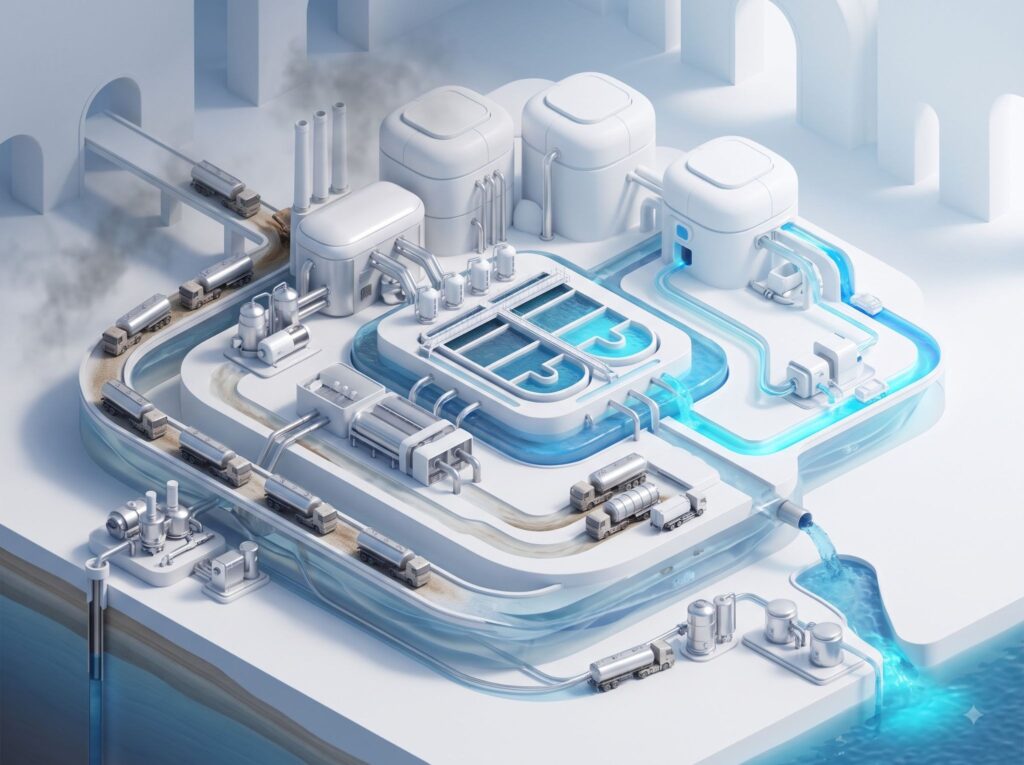
Extracting groundwater, transporting, operating pumps, wastewater treatment, sludge and slurry management, wastewater disposal- all processes contribute to the organisation's environmental footprint. When companies improve their wastewater treatment and implement water reuse, they often reduce the energy demands, thus reducing the associated emissions simultaneously. This creates value.
Recovered water lowers an innate dependence and consistent demand of freshwater, reduced amounts of sludge minimise the requirements and costs for transportation and disposal, and efficient treatment systems decrease the energy consumption of operations. Together, these fragmented improvements contribute to a greater measurable environmental gain that increasingly influences carbon credit frameworks and eventual sustainability reporting.
What can India learn from Singapore's NEWater Technology?
Singapore's NEWater programme is, indeed, a technological achievement, but its true success lies in its systems thinking.
NEWater Technology involves microfiltration, reverse osmosis, UV disinfection, and advanced monitoring, all of which already existed separately. Singapore innovated by integrating them into a reliable framework mechanism that transformed the reclaimed water into a trusted infrastructure. Today, Singapore’s reclaimed water contributes up to 40% of its water demands, and is projected to exceed 50% by the decade-end. Singapore’s industries, utilities, and policymakers alike all treat recycled water as a dependable resource.
The lesson is not about technology alone; it is about adopting the mindset and implementing it into the culture and governance.
While India already possesses many of the same building blocks in technology as Singapore, the challenge is how effectively these systems can be connected into larger water reuse ecosystems. As freshwater pressures intensify, reclaimed water needs to become part of India's industrial and urban futures. When systems are designed around water recovery for India, the opportunity is to scale India’s own version of that philosophy.
Our approach through Nanotechnology
At Jaskan, we understand water.
And we know that more efficient systems can recover more water from wastewater, generate less sludge, reduce chemical consumption, and improve the long-term operational resilience of the facility. Our objective is not simply wastewater treatment, but building resource recovery systems at a futuristic scale that stands the test of time. Our patented electrochemical nanotechnology platform utilises controlled electrochemical reactions to neutralise contaminants, reduce pollutant loads, and improve treatment efficiency. Compared to most conventional systems, our process requires remarkably lower chemical inputs while delivering high recovery quantities and more operational efficiency.
Our philosophy is reflected in our work with Adani Total Gas in Surat, commissioned in 2023. The facility utilises Jaskan's proprietary electrochemical nanotechnology to process the company’s industrial wastewater while effectively supporting Zero Liquid Discharge objectives and resulting in high water recovery performance.
By February 2026, this system had treated and reused up to 1.5 billion litres of water, saving more than 2,200 tonnes of methane emissions, and reducing over 69,000 tonnes of CO₂-equivalent emissions.
What Makes ZLD A ‘Liquid’ Investment Asset?
While most industrial investments depreciate over time, ZLD operates differently.
ZLD consistently generates value through resource recovery. Every litre of water recovered reduces freshwater procurement requirements, while every reduction in discharge lowers treatment, handling, and compliance-related costs. As water economics become increasingly compelling, facilities operating advanced Zero Liquid Discharge Plant systems will volumetrically benefit from lower operating costs, improved resource security, stronger ESG performance, and reduced exposure to future regulatory pressures.
For textiles, chemicals, pharmaceuticals, food producers, engineering companies, and energy corps, recovered water is increasingly becoming part of operational strategy.
Jaskan views ZLD as more than a water treatment infrastructure, rather as a long-term investment asset that not only supports water security, sustainability, resilience, and competitiveness but also aligns closely with our belief in ‘Remediating Future’—creating systems where environmental responsibility and business performance strengthen one another rather than compete.
Remediating Future is an ongoing knowledge initiative by Jaskan Nanotech, exploring water, industry, sustainability, infrastructure, technology, policy, and resource resilience. Through research, insights, case studies, and stories from across the world, we aim to make the future of water more understandable, accessible, and actionable for industries, communities, and decision-makers alike.
Treated Water – the New Life-Saving Resource
Illustrated: Waste Water Treatment Plant Treated Water – the New Life-Saving Resource The world consumes approx. 7mn litres of freshwater...
India’s Cleanest Rivers
The truth about India’s rivers that unfortunately never makes it to the news is that ‘not every river is under...
India can recycle >40% of its Sewage Water
India generates over 72,000 million litres of sewage water every single day which is enough water to fill about 29,000...